Aesthetic Medicine · Independent Concept Study
A practice that says no, designed to say it convincingly.
A self-initiated proposal for a nurse-owned Scottsdale med spa — 57 pages, a drawn visual system, and a complete GoHighLevel automation architecture behind the booking form.
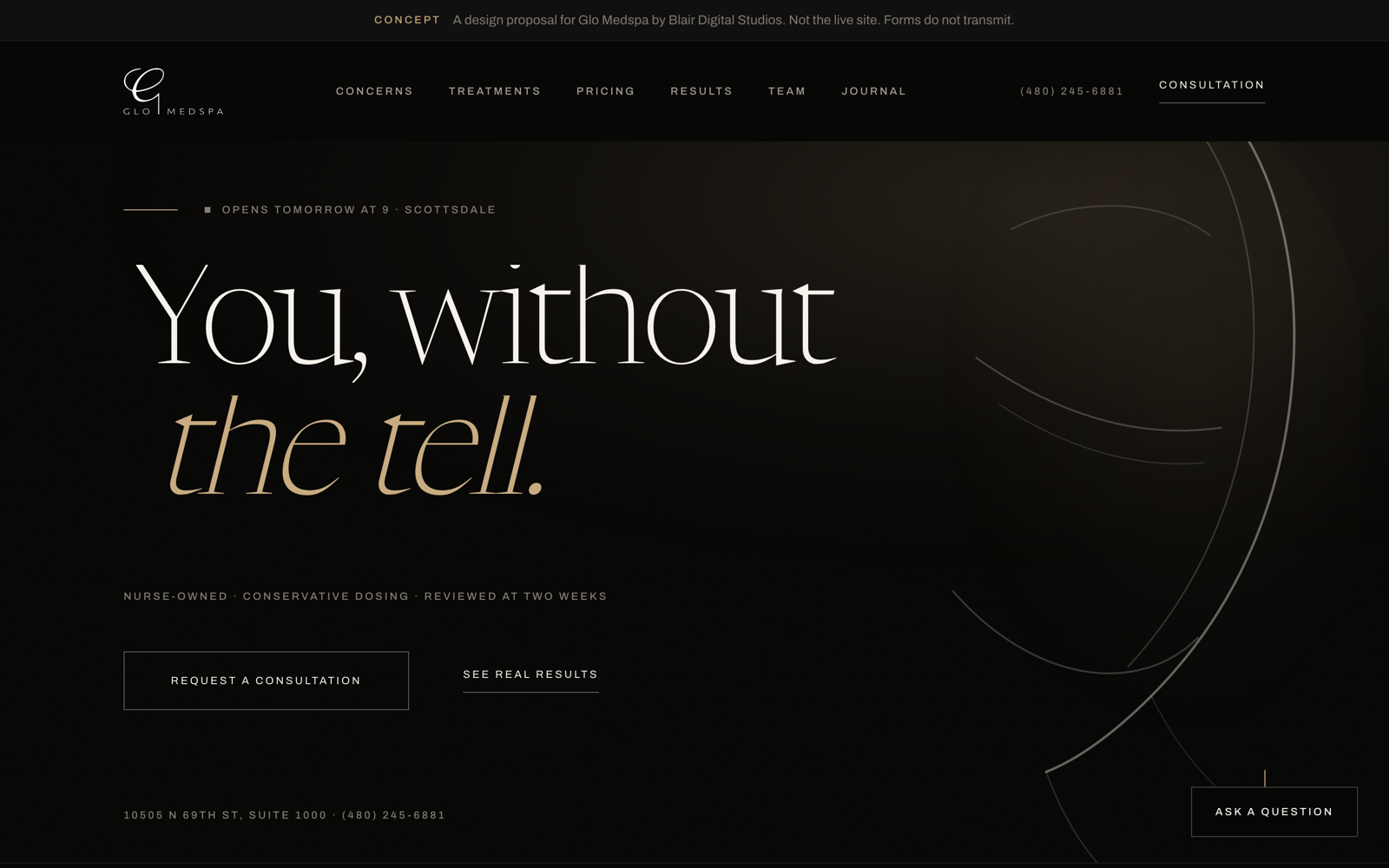
Independent concept work by Blair Digital Studios. Not presented as a commissioned client engagement. Business information, pricing and result photography belong to Glo Medspa.
The opportunity
Find the one thing the competition can't copy.
Challenge
Every med spa in the valley claims the same things — best injector, natural results, luxury experience. The category is saturated with sites that would still make sense with a different logo on them.
Blair's response
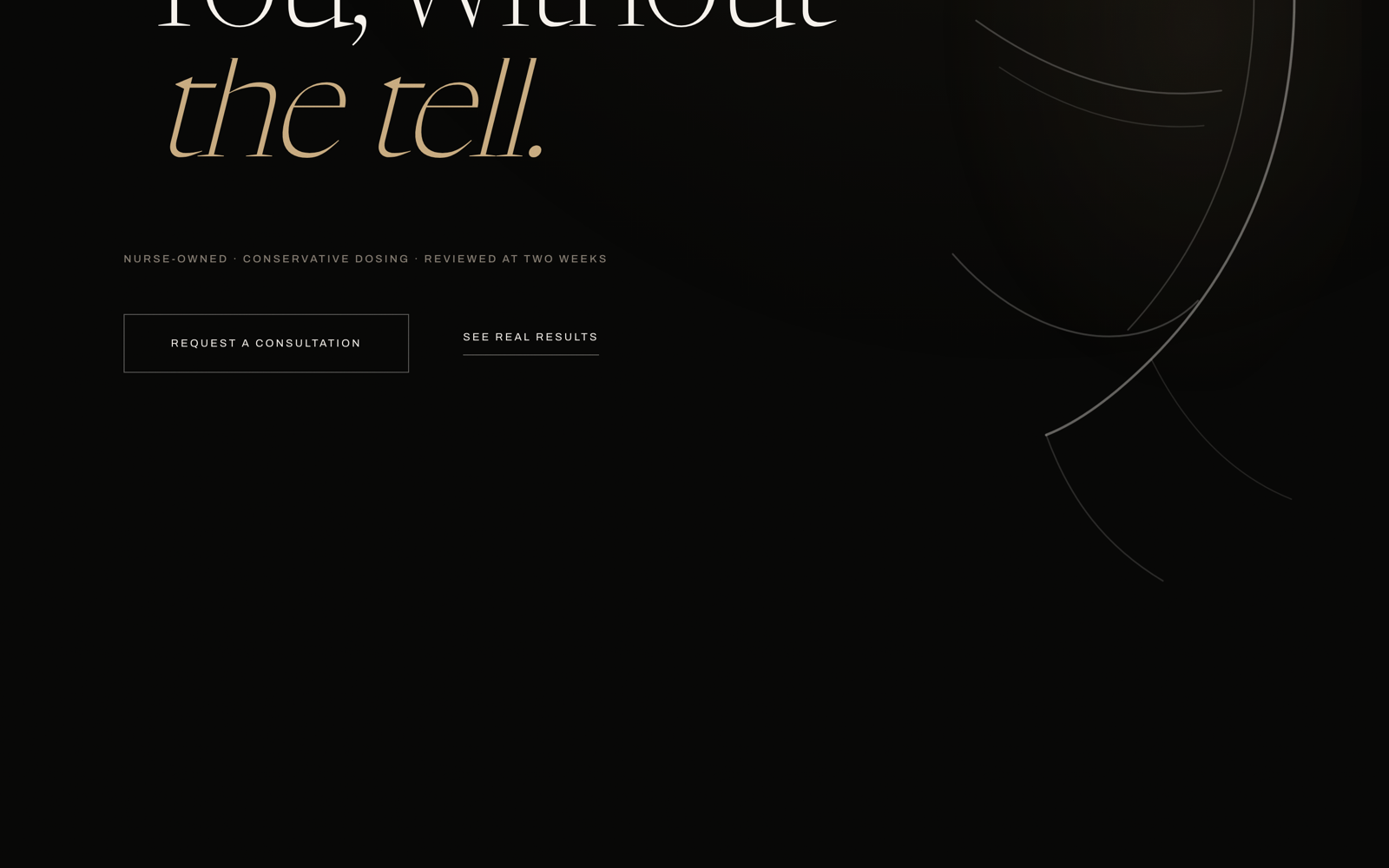
Build the entire site around the one position no competitor can safely copy: a practice that tells people they need less than they came in for. Every treatment page states who it is not for.
Selected screens
Where the positioning becomes structure.
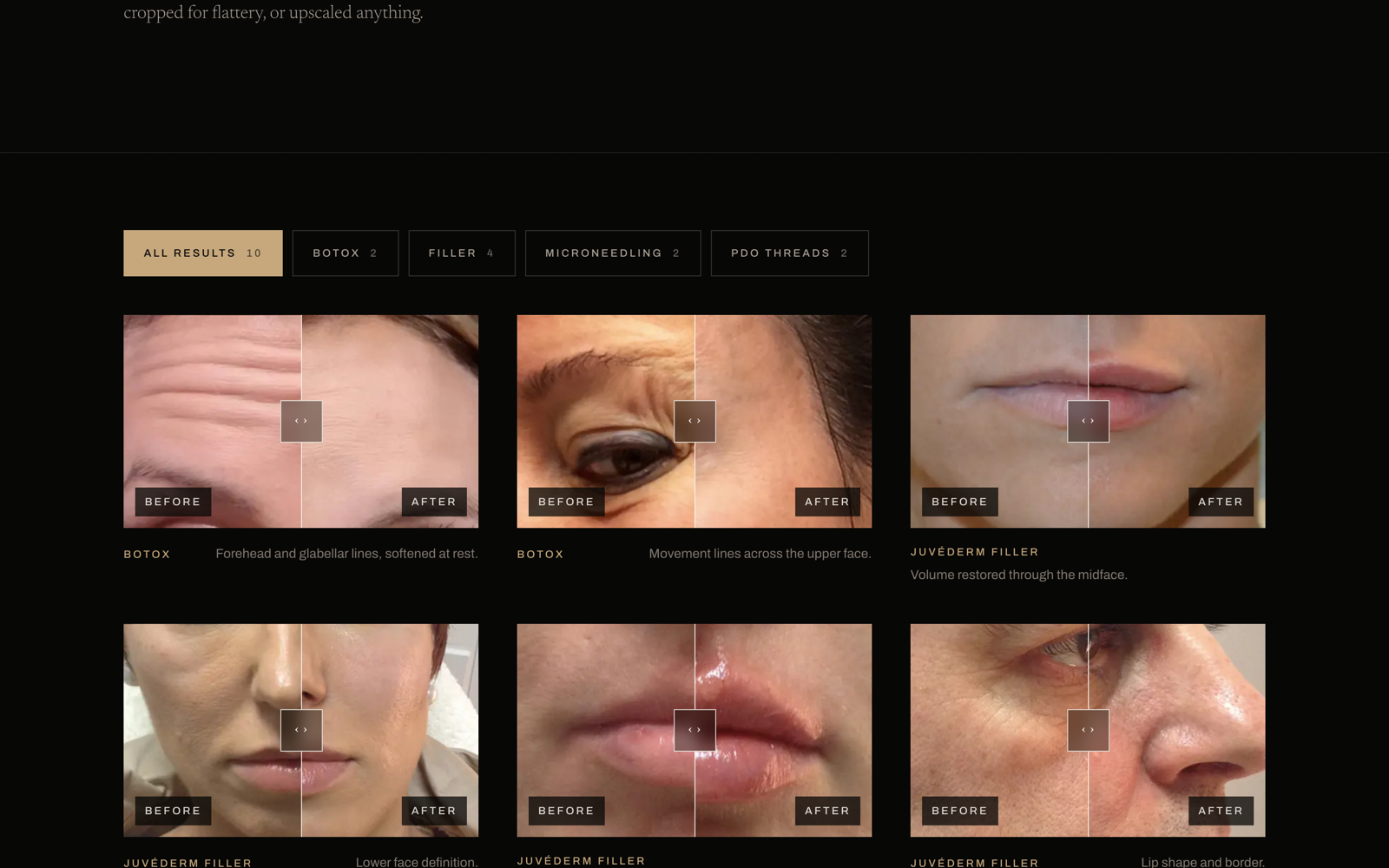
Interactive before-and-after, unretouched
Results
Drag-to-compare on the practice's own photography, filtered by treatment. Published with their own disclaimer that the images are not altered in any way, and never displayed above native resolution.
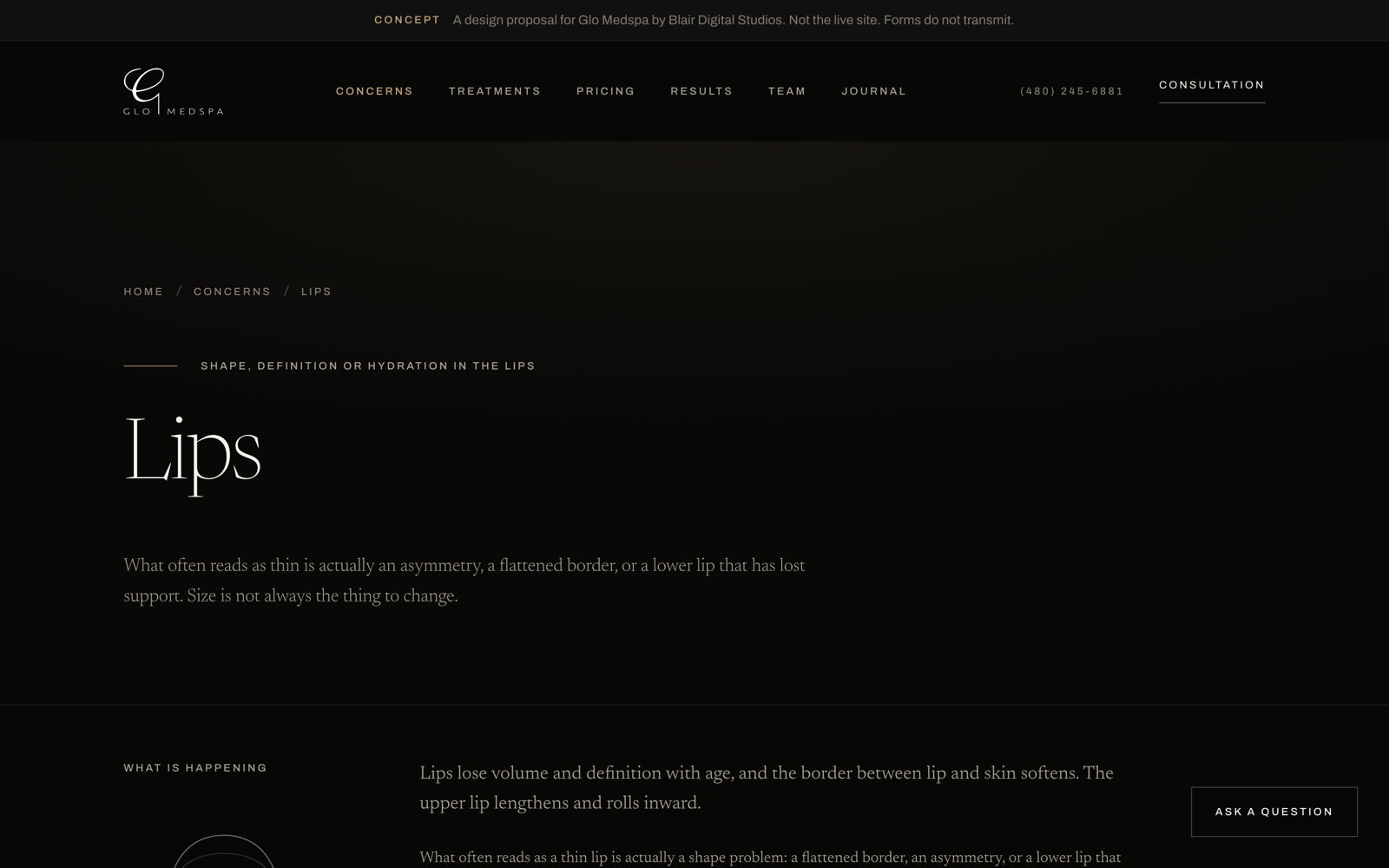
Concern-first discovery
Concerns
Nine pages organised around what someone notices in the mirror rather than around product names — each with an anatomical plate, an honest account of the common mistake, and a section stating what the practice will not claim.
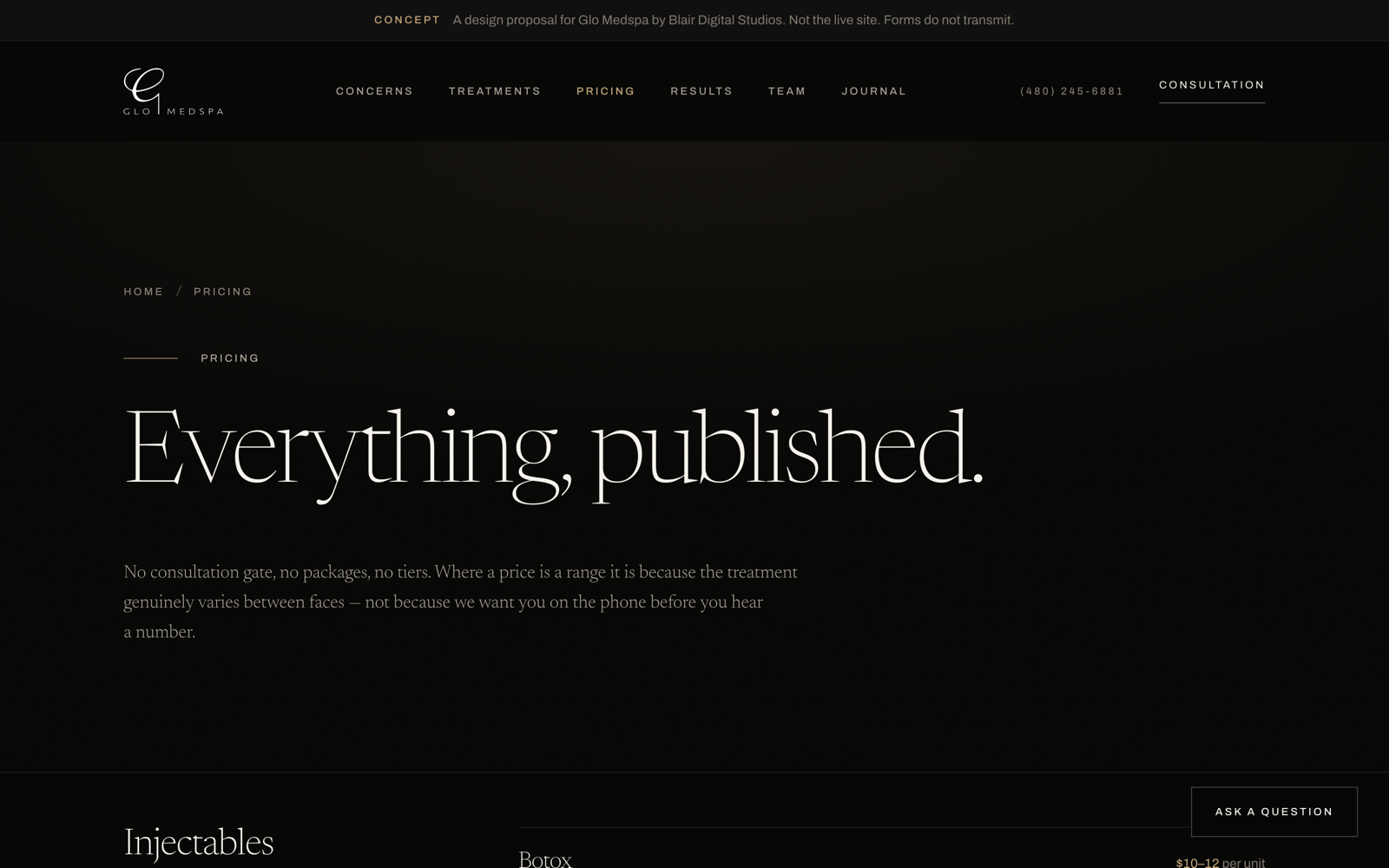
Published in full
Pricing
Forty-four line items with no consultation gate. In a category built on quoting privately, transparency is the differentiator.
Tonal chapter inversion
Philosophy
The page inverts to a light ground for the practice's founding principle. Clinical photography reads as evidence on light and as marketing on black.
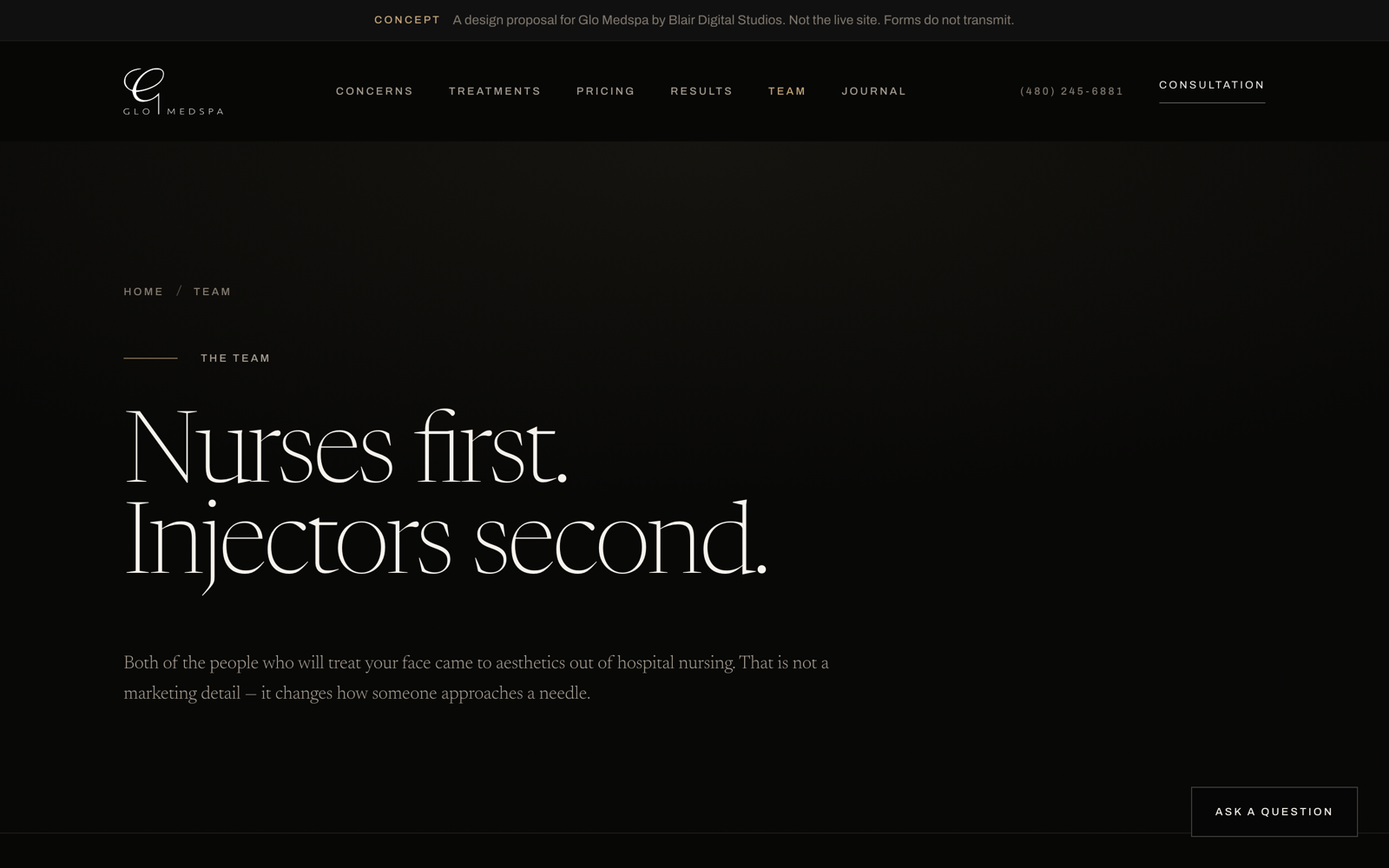
Provider credibility
Team
Two nurse injectors, both from hospital backgrounds. In aesthetics the provider is the product, so the credentials lead rather than the equipment list.
No stock, no AI imagery
A drawn visual language.
An audit of the practice's existing site found that every non-clinical photograph on it was licensed stock — a model on a seamless backdrop. On a business selling facial aesthetics, a purchased face undermines everything around it, and generated imagery is worse.
So the visual system is authored instead: anatomical plates that show where a concern actually sits, treatment timelines drawn to scale, and a skin cross-section marking the depth each treatment reaches. The only photography used is the practice's own — ten before-and-after pairs, never enlarged past the resolution they were shot at.
Scope
From positioning through CRM architecture.
Research & verification
Full audit of the existing site and listings, with every published claim traced to a verifiable source. Unsupported claims were removed rather than reworded.
Content architecture
57 routes — nine concern pages, fifteen treatment pages, published pricing, a preparation guide, and a seven-article journal. Around 14,000 words.
Design system
A single black-ground system with one accent used only as a mark, a drawn illustration language, and typography set at a 16:1 display-to-label ratio.
Assistant
An on-site assistant that answers only from published content and refuses anything clinical it cannot source — deliberately not generative.
CRM architecture
A GoHighLevel integration with fourteen custom fields, eighteen tags, a ten-stage pipeline and nine specified workflows, including a reactivation engine built on treatment intervals.
Production readiness
Idempotent provisioning script, a three-condition safety switch preventing accidental live capture, and full end-to-end integration testing.
Live presentation
Open the working site.
Fully responsive and functional. The booking form and assistant run in demo mode and transmit nothing.
Want a system this considered behind your own front door?
A free growth audit shows exactly where opportunities are falling through — before anything is built.